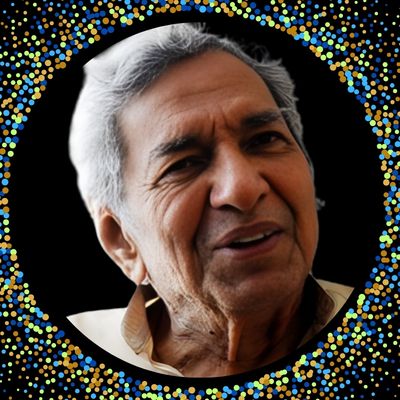
Bombay Ravi
Biography
Monsoon Ragas over the Ghats: The World of Bombay Ravi
Ravi Shankar Sharma, affectionately known in Kerala as Bombay Ravi, was a Hindi film composer who found an unexpected second home in Malayalam cinema in the 1980s. Born on 3 March 1926 in Delhi, he had no formal classical training and taught himself music while working odd jobs, including as an electrician in the Post and Telegraph department. After struggling in Bombay—at one point sleeping on platforms in Malad—he rose in the 1950s and 60s as one of Hindi cinema’s dependable melody makers, composing for more than 70 films. His songs for voices like Asha Bhosle and Mahendra Kapoor became part of the golden age soundscape, before he quietly faded from the Hindi mainstream in the 1970s.
The “Bombay Ravi” chapter began when Malayalam director Hariharan and writer M. T. Vasudevan Nair invited him to compose for the film “Panchagni” (1986), a collaboration that would change the course of his legacy. The haunting “Saagarangale” and “Aa raatri maanju poyi,” set to ONV Kurup’s lyrics, announced a new melodic colour in Malayalam—North Indian in its grammar but soaked in local emotional textures. This success led to a remarkable run: “Nakhakshathangal,” “Theertham,” “Vaishali,” “Oru Vadakkan Veeragadha,” “Vidyaarambham,” “Sargam,” “Paadheyam,” and later “Parinayam,” “Sukrutham” and “Ghazal.” In just over a dozen Malayalam films, he created a body of work that feels far larger than the numbers suggest.
Bombay Ravi’s melodic signature lay in graceful, raga‑tinged lines that were instantly accessible yet structurally disciplined. Listeners often note a Hindustani flavour in pieces like “Neeraaduvan nilayil” and “Indupushpam choodi nilkkum rathri,” but the orchestration and phrasing remain rooted in Malayalam film idiom, never feeling like “imported” tunes. He wrote with astonishing sensitivity for voices such as K. J. Yesudas and K. S. Chithra, giving them expansive, emotionally loaded melodies in films like “Vaishali,” “Oru Vadakkan Veeragadha” and “Sargam.” Even devotional‑leaning pieces like “Krishna Kripa Saagaram” or “Chandanalepa sugandham” balance classical rigour with cinematic immediacy.
His artistry did not go unnoticed by institutions either. Ravi received the Padma Shri in 1971 for his contributions to Indian film music, recognising primarily his Hindi work. In Malayalam, he won Kerala State Film Awards for Best Music Director for “Nakhakshathangal” (1986) and “Sargam” (1992), and Best Background Music for “Ghazal” (1993). He also bagged the National Film Award for Best Music Direction in 1994 for “Parinayam” and “Sukrutham,” and a Filmfare Award (South) for “Parinayam,” capping a late‑career renaissance that few composers achieve. These honours cemented his status as one of the most important non‑Malayali composers in the industry’s history.
Ravi passed away on 7 March 2012, but “Bombay Ravi” lives on every time a Malayali hums “Chandanalepa sugandham” or “Indraneelimayolum ee theeram.” His Malayalam phase is often described as having “changed the taste” of film melodies in the late 80s and early 90s, proving that an outsider could understand and elevate a region’s musical sentiment without diluting its identity. In many ways, his career reads like a raga that begins in the bustling studios of Bombay and resolves into a serene, rain‑washed cadence over the Western Ghats. For listeners who discovered him through Malayalam cinema, “Bombay Ravi” is less a geographical tag and more a genre of emotion in itself.
Associated Songs

Baso More Nainar Mein
Theertham

Chandanalepa sugandham
Oru Vadakkan Veeragadha
![Gagana Neelima [F]](https://i0.wp.com/malayalam-lyrics.com/wp-content/uploads/2026/03/gagana-neelima-f-.jpg?resize=150%2C150&ssl=1)
Gagana Neelima [F]
Kalivakku

Om Poorna
Sukrutham

Bhooloka vaikunda
Sargam

Kettta Gaanamo
Manassil Oru Manjuthulli

Mere labom pe
Gazal

Vaishagha pournnamiyo (M)
Parinayam

Paathiraakkombil
Vidyaarambham

Uthraalikkaavile
Vidyaarambham

Poovarambin
Vidyaarambham

Indraneelimayolum
Vaishali

Indupushpam
Vaishali

Theduvathethoru
Vaishali

Dum dum dum dundubhinaadam
Vaishali

Bandhangale
Sukrutham

Poroo (Ennodothunarunna)
Sukrutham

Sahasra
Sukrutham

Kadalinnagadhamaam neelimayil
Sukrutham

Sree Saraswathi
Sargam