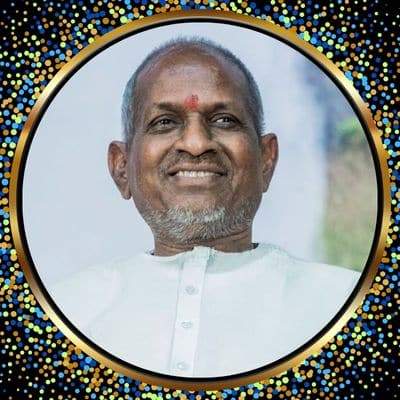
Ilayaraja
Biography
Ilaiyaraaja is one of India’s most celebrated film composers, renowned for blending Western harmonic sophistication with the emotional depth of Indian classical and folk music. Born on 2 June 1943 in Pannaipuram, a small village in present-day Theni district of Tamil Nadu, he rose from a modest rural background to redefine film music across South India and beyond. Over a career spanning several decades, he has composed for more than a thousand films in multiple Indian languages and created thousands of songs that have become cultural touchstones.
Early life and musical roots
Ilaiyaraaja was born Gnanathesigan into a poor Dalit family; his parents were Daniel Ramasamy and Chinnathayammal, and music was a part of everyday life at home and in his village. Growing up in rural Tamil Nadu immersed him in folk traditions, temple music, and rustic tunes that later became a signature layer in his film scores. At around 14, he joined the travelling troupe “Pavalar Brothers,” led by his elder brother Pavalar Varadarajan, performing across South India for nearly a decade and gaining invaluable experience as a singer, instrumentalist, and arranger.
Training and entry into cinema
In the late 1960s, driven by the desire to deepen his musical knowledge, Ilaiyaraaja moved to Madras (now Chennai) with very limited means, supported by his mother’s sacrifice of selling the family radio to fund the journey. He studied under the noted teacher Dhanraj Master, who introduced him to Western classical theory, counterpoint, harmony, and orchestration and gave him the name “Raja,” which later evolved into “Ilaiyaraaja.” During this period he also trained in classical guitar, appearing for Trinity College of Music, London, examinations and earning distinction, while simultaneously grounding himself in Indian classical forms.
Breakthrough and dominant years
Ilaiyaraaja’s film breakthrough came with the Tamil film “Annakili” (1976), whose rustic melodies and fresh sound immediately captured public attention and signalled a new era in film music. Through the late 1970s and 1980s, he became the dominant composer in Tamil cinema and a major force in Telugu, Malayalam, and Kannada films, often scoring dozens of films a year. He was known for working closely with singers such as S. P. Balasubrahmanyam, S. Janaki, K. J. Yesudas, and K. S. Chithra, crafting songs where melody, orchestration, and rhythm created an instantly recognizable sonic world.
Style, innovations, and international work
Ilaiyaraaja is celebrated for fusing Western classical techniques—especially complex harmony, counterpoint, and symphonic writing—with Indian ragas and folk idioms. His background in both traditions allowed him to write intricate string sections and choral parts while still preserving the emotional immediacy of South Indian melodies, sometimes even creating new ragas such as his own “Panchamukhi.” In 1993 he became the first Asian composer to write a full symphony for the Royal Philharmonic Orchestra in London, and later works like “Thiruvasakam in Symphony” further showcased his ability to adapt Indian devotional and literary material into large-scale Western orchestral forms.
Awards, honours, and later life
Over the years, Ilaiyaraaja has received numerous honours, including multiple National Film Awards for Best Music Direction and high civilian awards from the Government of India such as the Padma Bhushan and Padma Vibhushan. He has been widely ranked among the greatest film composers in world cinema, featuring in international lists and polls that recognize his prolific output and influence on generations of listeners and musicians. Beyond cinema, he has also served in public roles, including a nomination to the Rajya Sabha, and continues to compose, perform, and record, maintaining an active presence in Indian cultural life well into his later years.
Associated Songs
Uyirin uyire entho cheyvaan
Swarnnamaalika
Vaanam theduvaan vaa vaa
Swarnnamaalika

Manjalodu Kunkumathe
Sree Raamaraajyam

Thaamboola raagangal devaamrutham
Sree Raamaraajyam

Sapthaswaradhamaaroodam
Sree Raamaraajyam

Raamaanjiduvaan Sreeraamaayaname
Sree Raamaraajyam

Hridyuthva bhaaraaksha
Sree Raamaraajyam

Seetha Seemantham
Sree Raamaraajyam

Seetharaama charitham shree
Sree Raamaraajyam

Pattabhisheka harsholsavathil
Sree Raamaraajyam

Devarakalichiccha naamellaam
Sree Raamaraajyam

Mangalam Raghurama
Sree Raamaraajyam

Vaayu vaanam neere
Sree Raamaraajyam

Jagadhanandhakaaraka jaya
Sree Raamaraajyam

Rama Rama Raama Raama
Sree Raamaraajyam

Shamkhuchakrangal polulla
Sree Raamaraajyam

Shabdamayee shabda brahmamayee
Sooryan

Ponathevide Thalir Chellamanikkaatte
SMS

Innalle Muttathu Kinnaaram
SMS
![Kadappurathoru [D]](https://i0.wp.com/malayalam-lyrics.com/wp-content/uploads/2026/01/kadappurathoru-d-.jpg?resize=150%2C150&ssl=1)
Kadappurathoru [D]
SMS