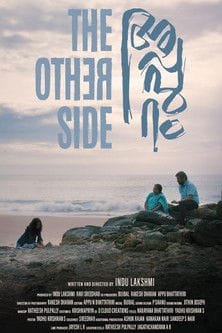
The Other Side
Cast

Anagha Maya Ravi
Janaki

Jagadish
Venu

Mini IG
Chithra
Synopsis
Janaki, a teenage girl navigating the turbulent landscape of adolescence, finds herself ensnared in an emotional labyrinth where filial devotion collides with the primal fear of abandonment. Her mother, Chithra, battles the invisible torments of psychological disturbance and depression, while her father, Venu, stands as a quiet sentinel against the encroaching darkness. Caught between these two worlds, Janaki becomes the unlikely guardian of a promise—a sacred vow that binds her to her mother with threads of love and desperation, forcing her to confront realities far too mature for her tender years.
The film unfolds as a meditation on the insidious nature of patriarchal suppression and deeply entrenched superstitions that plague contemporary Indian society. Janaki’s journey exposes the harsh machinery of gender discrimination, where even biological processes are shrouded in shame and taboo, and where young girls are rendered powerless in a world orchestrated entirely by adult decisions. Her rebellion against these suffocating norms becomes an act of defiance, a desperate attempt to transcend the limitations imposed upon her by tradition and societal expectations, all while grappling with the fragility of her mother’s mental state.
Ultimately, the narrative crystallizes into a poignant exploration of grief, loss, and the lengths to which love can push an individual toward impossible choices. Through intimate moments of tenderness and devastating episodes of crisis, the film captures the essence of living perpetually on the precipice of abandonment, transmitting waves of anxiety and empathy that linger long after the final frame. It is a deeply personal story, shot in the filmmaker’s native city in less than ten days, that refuses to offer easy answers or redemptive narratives, instead insisting that some suffering must be witnessed, respected, and mourned in solitude.[1][2][4][5]